Semaglutide vs. Tirzepatide: What’s the Difference and Which One Is Right for You?
They are the two biggest names in modern weight management. Here is a plain-English look at how they work in your body, what head-to-head studies actually show, and how to choose with your clinician.

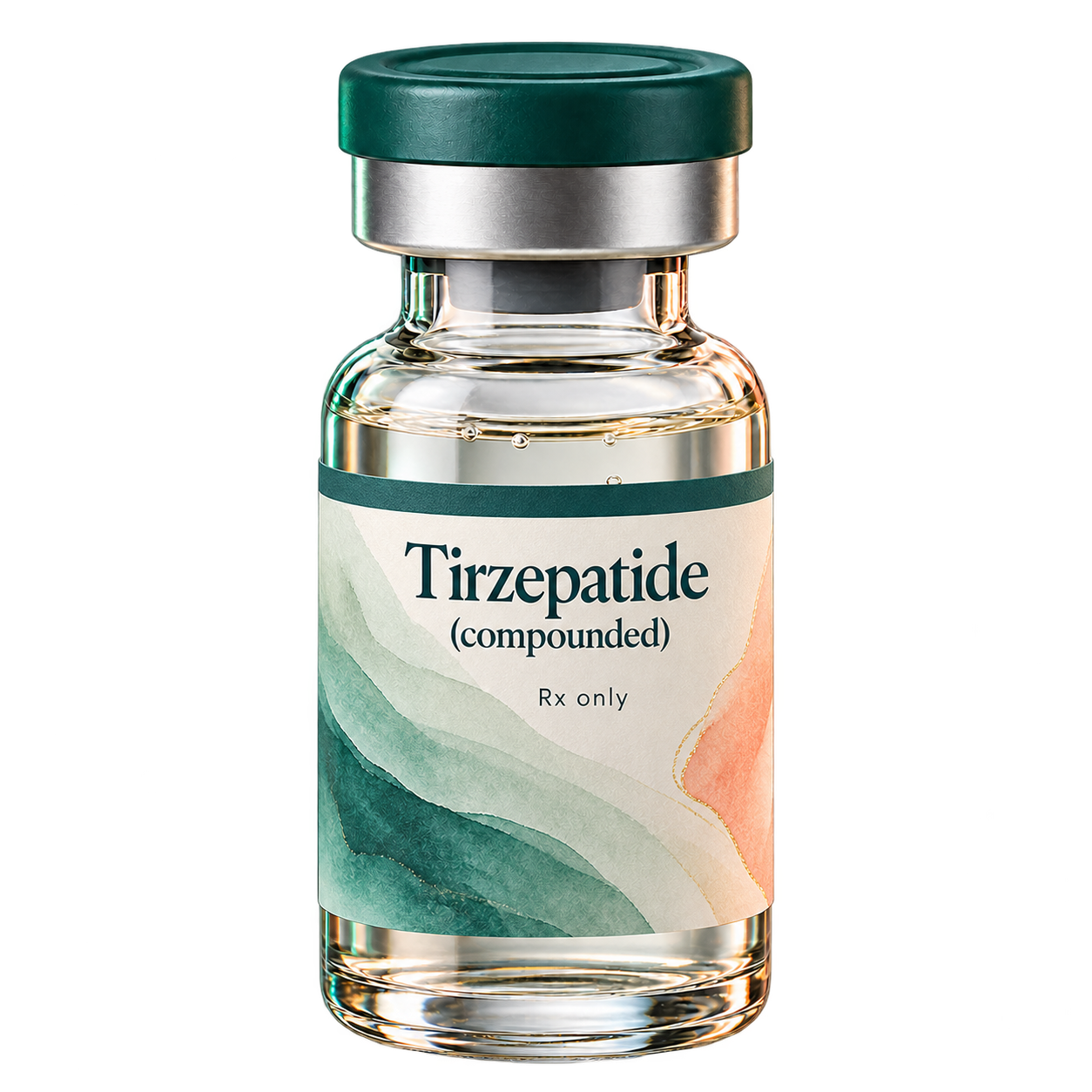 Tirzepatide · Dual-action (GIP + GLP-1)
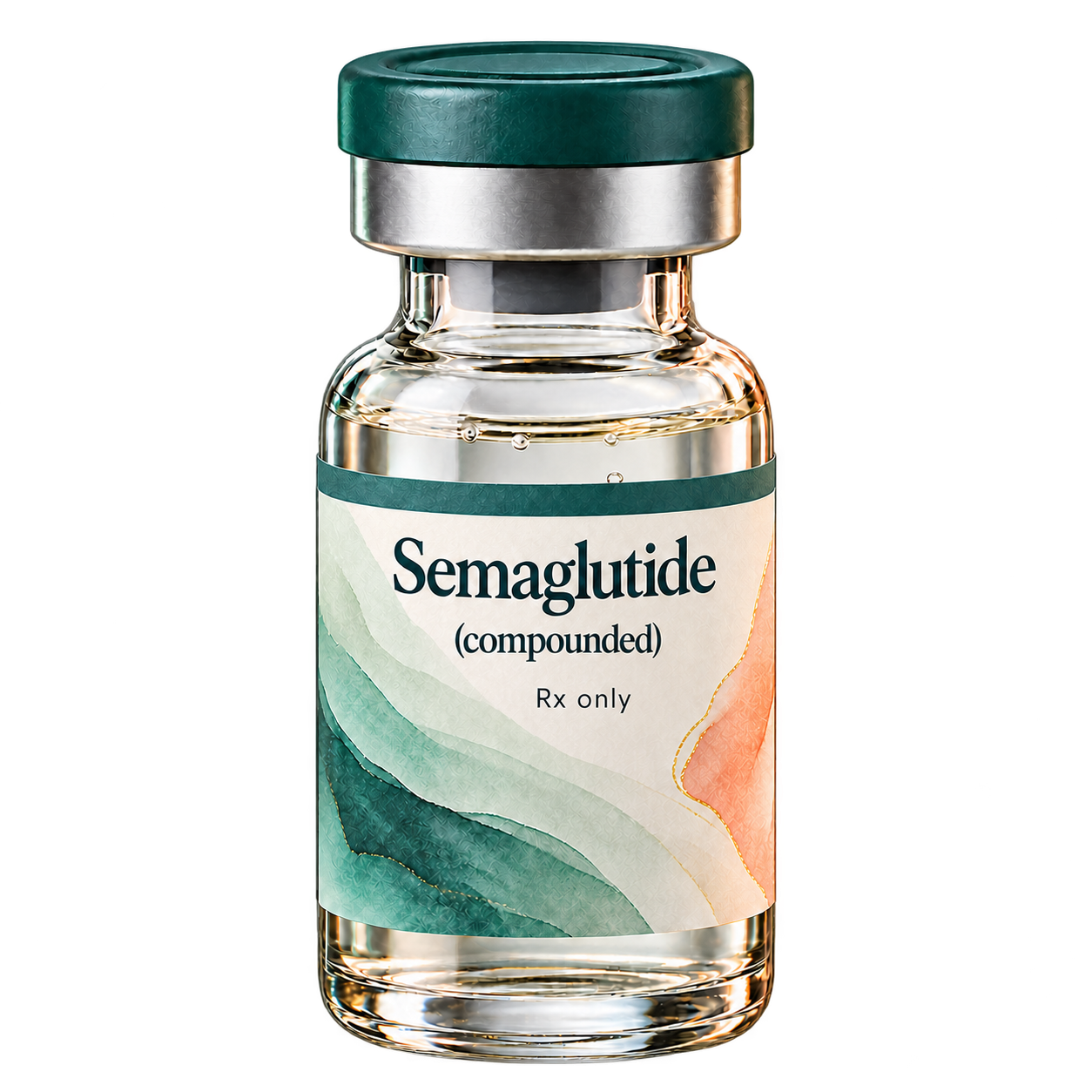 Semaglutide · Single-action (GLP-1)
The quick answer (if you only have 30 seconds)
- Both are once-weekly shots that quiet "food noise," help you feel full faster, and steady your blood sugar.
- Semaglutide targets 1 hormone pathway (GLP-1). It has been around longer, has deep research showing benefits for heart and kidney health, and costs a bit less per month.
- Tirzepatide targets 2 hormone pathways (GLP-1 + GIP). Because of this dual action, head-to-head clinical studies show people lose significantly more weight on tirzepatide (about 20% of their body weight vs. 14% on semaglutide), often with slightly fewer stomach side effects forcing them to stop.
1. How they work: single-action vs. dual-action
After you eat a meal, your gut naturally releases messenger hormones that tell your brain, "Hey, we have energy now, you can stop eating," and tell your pancreas to manage your blood sugar. Normally, those natural hormones break down in just a couple of minutes. Semaglutide and tirzepatide are long-lasting versions of those hormones that stay active in your body all week.
Semaglutide: The single-pathway option (GLP-1)
Semaglutide focuses on a single hormone receptor called GLP-1. Think of it as turning down the volume on constant hunger signals:
- In your brain: It quiets cravings and constant thoughts about food (often called "food noise") so you feel satisfied with smaller portions.
- In your stomach: It slows down how quickly food leaves your stomach, helping you stay physically full longer after meals.
- In your bloodstream: It helps your body release insulin smoothly when blood sugar rises, preventing sharp spikes and crashes.
Tirzepatide: The dual-pathway upgrade (GLP-1 + GIP)
Tirzepatide activates that same GLP-1 receptor, plus a second natural gut hormone receptor called GIP. Adding GIP does three helpful things that GLP-1 cannot do alone:
- Stronger appetite control: When GIP and GLP-1 work together in the brain, they curb appetite more effectively than GLP-1 by itself.
- Smarter fat metabolism: GIP receptors live directly on fat tissue, helping your body process fats and respond to insulin more efficiently.
- A natural "buffer" against nausea: Research suggests that activating GIP receptors in the brain actually calms down some of the nausea signals triggered by GLP-1. That helps explain why people on tirzepatide can reach higher weight-loss results without extra stomach upset.
2. How much weight do people actually lose?
For years, people had to compare separate studies to guess which medication worked better. Recently, a major 72-week head-to-head clinical trial (called SURMOUNT-5, published in the New England Journal of Medicine) tested weekly tirzepatide directly against weekly semaglutide in 751 adults with obesity or overweight (without diabetes).
Here is what happened over roughly a year and a half of treatment:
| What researchers measured | Tirzepatide (weekly shot) | Semaglutide (weekly shot) |
|---|---|---|
| Average weight lost (%) | 20.2% of starting body weight | 13.7% of starting body weight |
| Average weight lost (pounds) | ~50 lbs (22.8 kg) | ~33 lbs (15.0 kg) |
| Waistline reduction | 7.2 inches (18.4 cm) | 5.1 inches (13.0 cm) |
| People who lost at least 15% of their weight | Nearly 2 in 3 people (64.6%) | About 2 in 5 people (40.1%) |
| People who lost at least 20% of their weight | Nearly half (48.4%) | About 1 in 4 (27.3%) |
| Stopped early due to stomach side effects | 2.7% of participants | 5.6% of participants |
A separate head-to-head study in people with type 2 diabetes (SURPASS-2) showed a similar pattern: tirzepatide lowered blood sugar (HbA1c) more and helped participants lose nearly twice as much weight as semaglutide over 40 weeks.
3. Benefits beyond the scale: heart, sleep, and kidney health

Clinical trials on these reference molecules have also uncovered major whole-body health benefits beyond weight loss:
- Heart health: In the landmark SELECT study of over 17,600 adults with overweight/obesity and heart disease, semaglutide lowered the risk of major heart events (like heart attack or stroke) by 20%. Meanwhile, in the SUMMIT trial for people with obesity and heart failure (HFpEF), tirzepatide reduced worsening heart failure events or cardiovascular death by 38%.
- Sleep apnea: In the SURMOUNT-OSA trial, tirzepatide reduced nighttime breathing interruptions by more than half, helping roughly 50% of participants reach complete resolution of moderate-to-severe obstructive sleep apnea.
- Kidney protection: In the FLOW trial, semaglutide reduced major kidney disease events by 24% in patients with type 2 diabetes and chronic kidney disease.
4. Side effects and 1 important birth-control rule to know
Because both medications slow down digestion, their day-to-day side effects are very similar. The most common ones are mild-to-moderate nausea, heartburn, diarrhea, or constipation, mostly when you first start or when you step up to a higher dose. That is why your clinician starts you on a low starter dose and increases it gradually over several months.
Important note if you take birth control pills: Because tirzepatide slows down your stomach noticeably each time you start or raise your dose, it can make oral birth control pills about 20% less effective at absorbing. If you take tirzepatide and use oral birth control pills, you should switch to a non-oral method (like an IUD, ring, or patch) or add a barrier method (like condoms) for 4 weeks after starting and for 4 weeks after every dose increase. Injectable semaglutide does not require this extra backup window.
Who should avoid both medications? Neither medication should be used if you are pregnant or trying to become pregnant, if you have a history of pancreatitis, or if you or a family member has a history of medullary thyroid carcinoma (MTC) or Multiple Endocrine Neoplasia syndrome type 2 (MEN 2).
5. Comparing compounded options and pricing at Sovi
At Sovi, if a licensed clinician determines that a compounded GLP-1 or GIP/GLP-1 treatment plan is right for you, your plan includes your medication, biweekly 1:1 weight-loss coaching, and basic lab work at Quest or Labcorp, with zero membership fees:
| Feature | Tirzepatide injections | Semaglutide injections |
|---|---|---|
| How it works | Dual-action (GIP + GLP-1) | Single-action (GLP-1) |
| How you take it | Once-weekly tiny under-the-skin shot | Once-weekly tiny under-the-skin shot |
| 1-month flexible plan | $289 billed every 4 weeks | $229 billed every 4 weeks |
| 3-month prepaid plan | $259 / month equivalent ($777 upfront for 12 weeks) | $199 / month equivalent ($597 upfront for 12 weeks) |
| What’s included | 1:1 coaching & basic Quest/Labcorp labs included | 1:1 coaching & basic Quest/Labcorp labs included |
6. Bottom line: which one should you choose?
You never have to guess on your own, as your clinician will review your health history and help you pick. As a general rule of thumb:
- Tirzepatide is usually the top pick if: You want the strongest overall weight-loss potential (20.2% vs. 13.7% in head-to-head trials), you want the dual GIP + GLP-1 boost for stubborn metabolic resistance, or you want a slightly lower chance of stopping due to stomach upset.
- Semaglutide is a great fit if: You want a proven, single-hormone GLP-1 option at our most affordable monthly price ($229/month flexible or $199/month on a 3-month plan), or you take oral birth control pills and do not want to worry about backup contraception during dose changes.
Ready to find out which option fits your goals?
Answer a few questions about your health and goals in our 5-minute online intake. A licensed clinician will review your profile and recommend a personalized plan.
* Educational information only; this guide summarizes published peer-reviewed clinical research on studied reference molecules (including the SURMOUNT, SURPASS, SELECT, SUMMIT, and FLOW clinical trial programs) and does not constitute individual medical advice or a guarantee of results. Prescription required. Compounded medications offered through Sovi are prepared by licensed compounding pharmacies for an individual patient’s prescription; compounded medications are not FDA-approved, have not been evaluated in these clinical trials, and FDA does not review them for safety, effectiveness, or quality before marketing. Sovi does not manufacture compounded medications. Product images are illustrative, and actual dispensed packaging and labeling may differ.