Month-by-Month GLP-1 Timeline: What Actually Happens in Your First 90 Days (and Beyond)
From the first week when "food noise" goes quiet to the steady weight loss of Months 2 through 9, here is a realistic, plain-English timeline of what to expect on weekly tirzepatide or semaglutide.

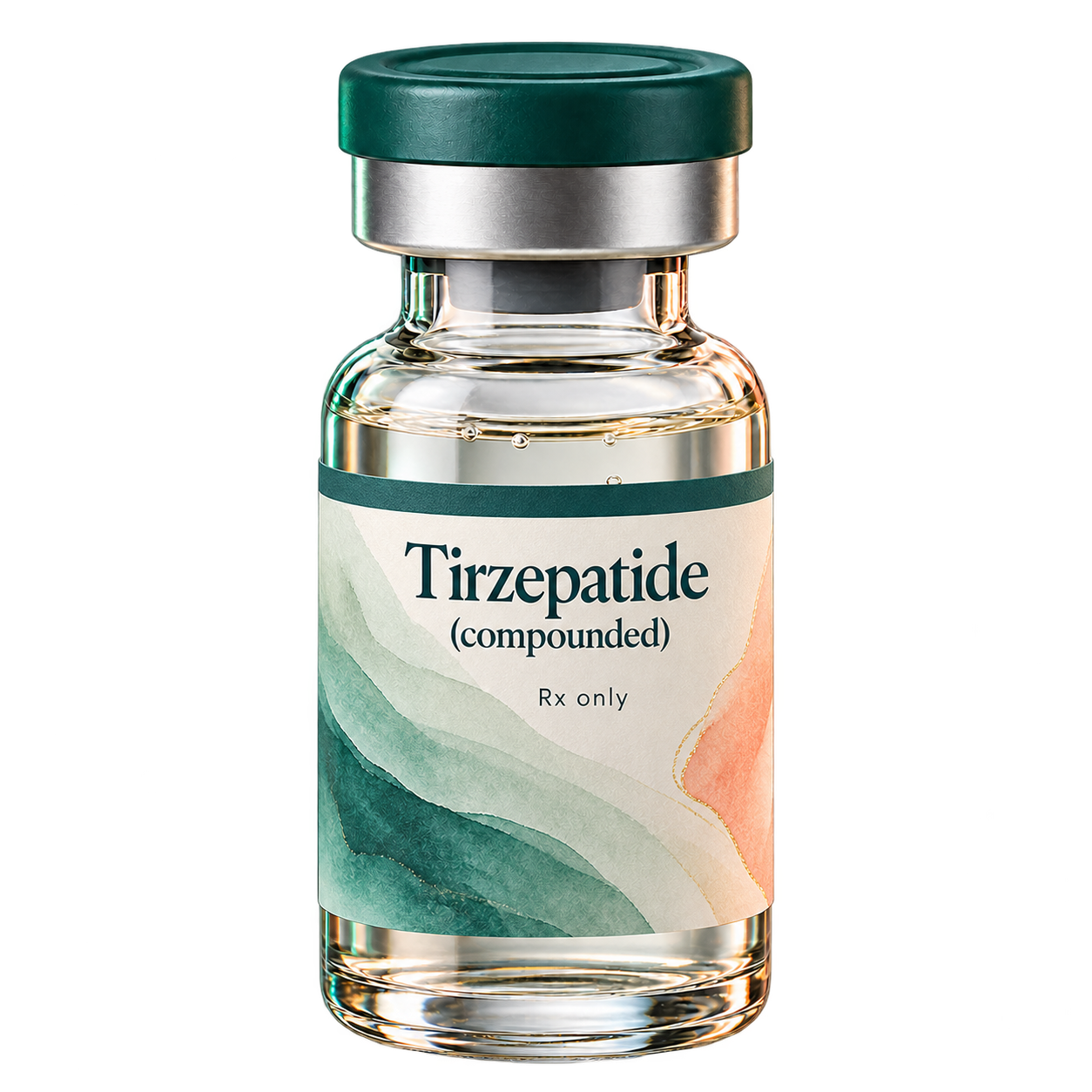 Tirzepatide · Dual GIP + GLP-1
 Semaglutide · Single GLP-1
The quick answer (if you only have 30 seconds)
- Month 1 is a "warm-up" month: Your starter dose is intentionally low so your stomach and brain can adjust without heavy nausea. You will likely notice "food noise" quiet down right away and lose about 2 to 5 lbs (1% to 2% of your body weight), mostly water and glycogen.
- Months 2 and 3 are when real fat loss kicks in: As you step up to an active dose, weight loss speeds up to a steady 1 to 2 lbs per week, averaging 5% to 8% total body weight lost (roughly 12 to 20 lbs) by the 90-day mark.
- What if you lose weight slowly at first? Do not panic. In the landmark SURMOUNT-1 study, 90% of "late responders" who had not lost 5% by Week 12 still went on to achieve meaningful weight loss once they reached their full maintenance dose.
1. Your first 90 days at a glance
Why does your clinician increase your dose every 4 weeks instead of starting high right away? Because both semaglutide and tirzepatide stay in your body for about 5 to 7 days, it takes roughly 4 weeks for each dose level to build up to a steady state. Moving up slowly every 4 weeks lets your digestive system adapt smoothly.
| What to expect | Month 1 (Weeks 1 to 4) | Month 2 (Weeks 5 to 8) | Month 3 (Weeks 9 to 12) |
|---|---|---|---|
| Goal of this phase | Let your stomach & brain adjust (starter dose) | First active fat-loss step-up | Steady momentum & 90-day check-in |
| What you feel | "Food noise" and constant snacking cravings drop within days; you feel full on much smaller portions | Consistent appetite control; occasional mild fatigue if you forget to drink water or eat enough protein | Smaller portions feel natural; energy and stamina rebound as blood sugar steadies |
| Typical total weight lost | 1% to 2% (~2 to 5 lbs) | 3% to 5% (~6 to 12 lbs total) | 5% to 8% (~12 to 20 lbs total) |
| Health markers improving under the surface | After-meal blood sugar spikes flatten out | Fasting blood sugar and triglycerides start dropping | A1c drops by 0.5% to 1.0%; systolic blood pressure drops by 2 to 5 points |
2. Month-by-month breakdown: what you will actually feel
Month 1 (Weeks 1 to 4): Quieting "food noise" and letting your stomach adjust
Within a few days of your very first weekly shot, the medication reaches appetite centers in your brain and gently slows down how fast food leaves your stomach. Most people notice two things right away:
- Mental quiet around food: That constant background chatter about what is in the pantry or what to eat next ("food noise") turns way down.
- Early fullness: Halfway through a normal meal, your stomach sends a clear signal that you are comfortably full.
How to feel your best in Month 1: About 15% to 40% of people experience mild nausea, heartburn, or constipation while their body adjusts. Eat slowly, stop at the first sign of fullness, skip heavy or greasy fried foods on shot day, and aim for 2 to 3 liters of water a day.
Month 2 (Weeks 5 to 8): Stepping into steady fat loss
At Week 5, if you tolerated your starter dose well, your clinician typically steps you up to the first active weight-loss tier. Now that your calorie intake is naturally lower week after week, your body shifts into burning stored fat at an average pace of 1 to 2 pounds per week.
If you feel a little tired during Month 2, it is usually because you are eating fewer calories and carbs than your body is used to, or you are slightly dehydrated. Adding electrolytes to your water and prioritizing protein at every meal usually brings your energy right back up. (And if you still have mild nausea at Week 7, tell your clinician: staying on your current dose for an extra 4 weeks before stepping up is completely normal!)
Month 3 (Weeks 9 to 12): The 90-day milestone (and why "late responders" still win)
By the end of Month 3, most people have lost 5% to 8% of their starting body weight, their clothes fit noticeably looser around the waist, and lab markers like blood sugar, insulin resistance, triglycerides, and blood pressure are all moving in the right direction.
What if you haven't lost 5% by Week 12? In the SURMOUNT-1 clinical trial for tirzepatide, 82% of people hit at least 5% weight loss by Week 12 ("early responders"), while 18% took a bit longer ("late responders"). When researchers followed those late responders as they continued stepping up their dose, 90% of them still went on to achieve clinically meaningful weight loss! Because the first couple of months are starter doses, your body sometimes just needs a higher maintenance tier before the scale really moves.
3. Beyond 90 days: Months 4 to 12, protecting muscle, and keeping weight off

- Months 4 to 9 (The steepest drop): This is the prime window where most of your total weight loss happens, leading toward the 68-to-72-week clinical trial averages of ~14% to 15% on semaglutide and ~20% on tirzepatide.
- Months 12 to 18 (Your new set point): Eventually, your weight naturally levels off into a healthy plateau. That does not mean the medication stopped working; it simply means your smaller body now burns fewer calories and has reached a new balance.
- How to make sure you lose fat, not muscle: In any major weight-loss journey, roughly 25% to 40% of weight lost can come from lean muscle if you are not careful. To keep your metabolism strong and protect your muscle, aim for 1.2 to 1.6 grams of protein per kilogram of body weight daily (eating your protein first at each meal) and do 2 to 3 short strength or resistance workouts a week. Every Sovi weight-management plan includes biweekly 1:1 coaching to help you nail these habits.
- Planning for long-term maintenance: Clinical studies (like STEP 1 extension and SURMOUNT-4) show that if people stop their medication abruptly without a maintenance plan, hunger hormones bounce back and much of the weight can return over the next year. Once you hit your goal weight, your clinician can help you either stay on a steady maintenance dose or gradually taper down to a lower maintenance or microdosing tier.
Start your 90-day journey with a licensed clinician
Every Sovi weight-management plan includes your personalized medication schedule, biweekly 1:1 coaching, and basic labs at Quest or Labcorp, with zero membership fees.
* Educational information only; this guide summarizes published peer-reviewed clinical research on studied reference molecules (including the STEP, SURMOUNT, SELECT, and FLOW clinical trial programs) and does not constitute individual medical advice or a guarantee of results or timelines. Individual weight-loss trajectories vary. Prescription required. Compounded medications offered through Sovi are prepared by licensed compounding pharmacies for an individual patient’s prescription; compounded medications are not FDA-approved, have not been evaluated in these clinical trials, and FDA does not review them for safety, effectiveness, or quality before marketing. Sovi does not manufacture compounded medications. Product images are illustrative, and actual dispensed packaging and labeling may differ.